
Caught in the Downpour
Ever driven through a downpour so heavy that even your wipers on full blast can’t clear the windshield? You’re inching along, squinting through the blur, heart pounding, wondering when you’ll see the road again.
That’s how the last nine days felt while I tried to write this reflection on the two recent Sunday Gospels about Jesus’ baptism.
I kept looking for a good angle. Was it the baptism of Jesus as the bookend to Christmas—the movement from Bethlehem’s quiet arrival to the launch of His public ministry? Or maybe the family tie—John the Baptist leaping in Elizabeth’s womb at Mary’s greeting, filled with the Holy Spirit even then in recognizing the unborn Christ before him, a recognition that he would rejoice in again years later at the Jordan.
Or maybe it was God’s deliberate choice of the Jordan River itself as the place for the baptism. Jordan, in Hebrew, is Yarden, meaning “descent.” A fitting name for a river that flows down into the lowest place on earth in the Dead Sea.
Low places. Scripture shows God repeatedly meeting us in our lows, then raising us toward new life.
All so profound and full of mystery. But something felt off—like I was circling for a landing on a runway without lights. What was the true aim for this post? I couldn’t pin it down.
Then I felt that nudge from the Holy Spirit:
This isn’t about head knowledge. It’s a heart matter.
That Grief
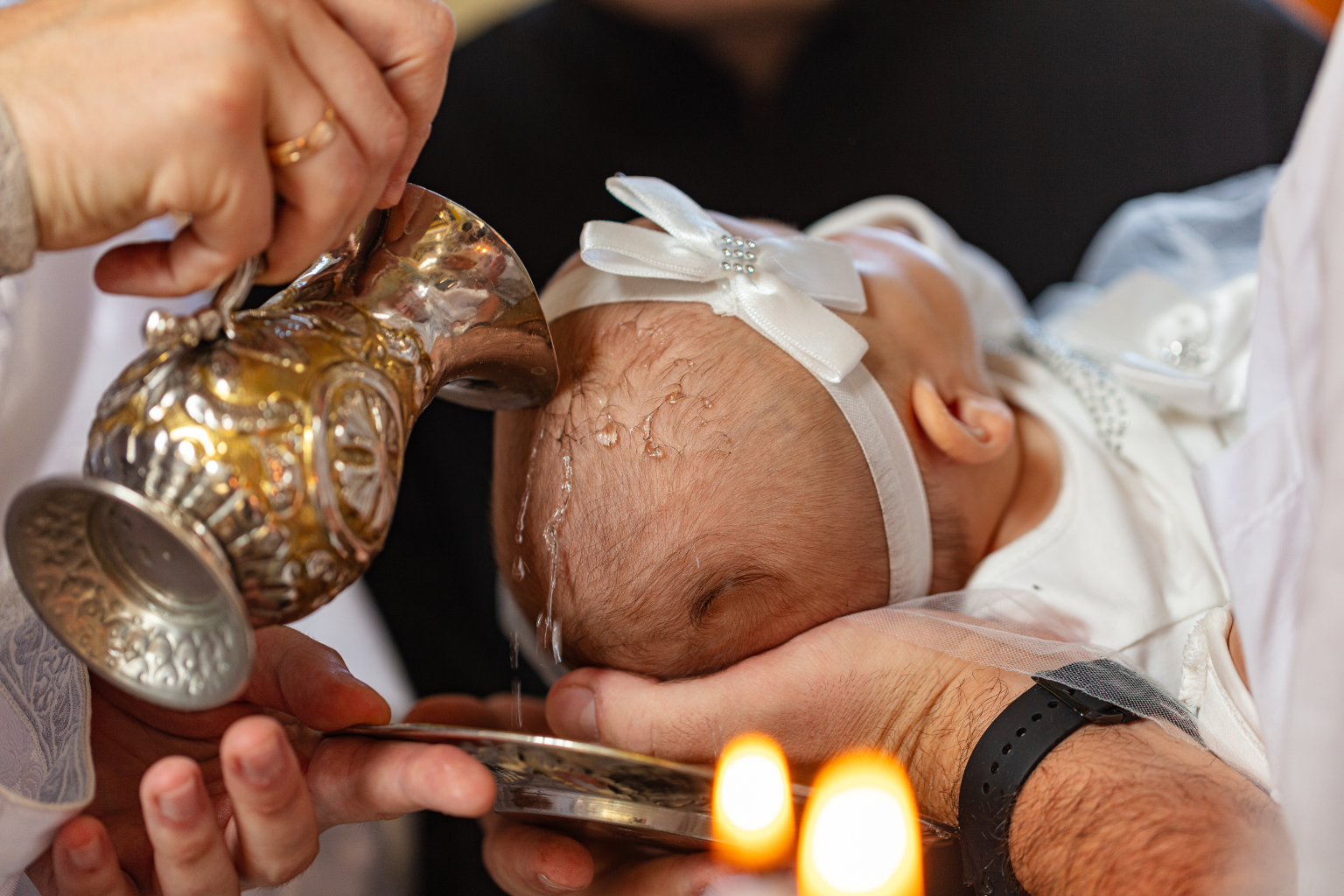
Then after Mass yesterday in my Catechesis of the Good Shepherd class, I showed the three- to five-year-olds what happens at baptism. I held up my fist like a little head, poured water over it three times slowly, and said the Priest’s words we all know:
“[Name], I baptize you in the name of the Father, and of the Son, and of the Holy Spirit.”
As the water ran down my hand, a nagging ache welled up in me.
That grief.
That regret.
I never baptized my own children.
So many years in the rearview now. At the time, I thought I was doing the right thing: Let them decide when they’re older. Why rush it? What if they resent being forced into Catholicism?
And then there was all the cultural criticism being heaped on the Church. It was too corrupt, too hypocritical, too rigid, too outdated. Too many “toos.” My own weak formation in the Catholic faith left big gaps, and by my late twenties I flirted with joining another, “more tolerable” Christian denomination. I saw my choice as a noble one: give my kids the baptismal choice I never had for myself as a baby.
For years, I was at peace with that decision.
The panic didn’t hit until after I came home to the Catholic Church in 2017. That’s when the veil on spiritual warfare was lifted for me to see clearly. Evil isn’t abstract or symbolic—it’s active. This world isn’t neutral ground. And suddenly I understood that God’s Word and the sacraments aren’t just comforting rituals; they’re real armor.
I finally grasped the importance of the gift we receive in baptism: the indwelling of the Holy Spirit.
And then the thought came, uninvited and crushing: But my kids—what did they have?
The fear hit like a wave. Had I left them exposed? Unclaimed? Outside of the Holy Spirit’s reach? By waiting, had I rejected something God gives freely? Had I cracked the door and left that “inner room” empty where God should have been invited to dwell?
That fear paralyzed me until just the other night when God, in His mercy, gently corrected my misunderstanding.
If you’re reading this and worrying about your own unbaptized children, hear this clearly: God does not abandon anyone. The Holy Spirit is always at work in every human heart, drawing us toward truth, goodness, and love through actual graces—those nudges, helps, and stirrings we all experience—long before baptism. God’s love is never withheld.
Still, watching those little ones—all baptized as infants themselves—stare wide-eyed as the water poured over my hand, I felt exposed.
Even with my understanding of the gift of the Holy Spirit, I still couldn’t explain why the Church prefers baptizing infants. Why wasn’t waiting for their own “yes” better? The basic question still unanswered in my heart hit me square: If baptism is first and foremost a gift from God, and not some sort of faith declaration, why had I held it back?
Chosen Before We Choose
In my mind, I just kept comparing Catholic baptism to this “Believers Baptism” so popular in other Christian churches. Several extended family members have even gone this route and I’m so joyful for them—watching them come to Jesus, pursue Him intentionally, and publicly declare their faith. It’s beautiful. And so what do I say to them about the Catholic view on infant baptism?
After class that day, I went home and opened my Catholic Catechism of the Church (CCC), determined to find a way to articulate this answer not just for anyone who might ask, but mostly for myself. How can I teach what I can’t explain?
As I read the pages in the CCC, it finally clicked.
I had been framing baptism backward.
Catholic baptism doesn’t wait for understanding. It doesn’t ask a child—or us—to earn, prove, or declare love first. God acts first. Baptism is pure gift: a claim, a seal, a real channel of grace through which the Spirit’s life flows into us. Before we can grasp it, we are adopted, welcomed, and named as God’s own.
That’s why the Church urges infant baptism, ideally within the first weeks of life—not because God’s love is limited without it, but because His love longs to give everything as early as possible.
I understand now why believer’s baptism once appealed to me. It centers choice, declaration, ownership. How very American: you choose, you decide, you declare. Too many “you’s.”
Catholic baptism flips the script.
God chooses.
Through the sacrament, He provides the sign, the words, the action. And we receive something real and lasting: incorporation into Christ, adoption as God’s child, an enduring seal. God says, “You are mine,” long before we can say anything back.
And once I saw baptism this way, the point of Jesus coming to be baptized at the Jordan finally came into focus.
Stepping In
Then Jesus came from Galilee to the Jordan to be baptized by John. But John tried to deter him, saying, “I need to be baptized by you, and do you come to me?”
Jesus replied, “Let it be so now; it is proper for us to do this to fulfill all righteousness.” Then John consented.
As soon as Jesus was baptized, he went up out of the water. At that moment heaven was opened, and he saw the Spirit of God descending like a dove and alighting on him. And a voice from heaven said, “This is my Son, whom I love; with him I am well pleased.” (Matthew 3:13–17).
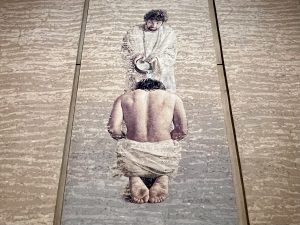
Jesus didn’t enter the water because He needed cleansing—He’s sinless. He stepped in to stand exactly where we stand—shoulder to shoulder with sinners—so that we might rise to stand where He stands: beloved, claimed, alive in the Trinity.
He went first, and by doing so He opened a major channel through which we receive God’s grace.
Baptism isn’t about freedom of choice. It’s about receiving the Spirit of Truth within us, to help guide us toward true freedom in Christ.
Baptism isn’t a magic guarantee that wipes away questions of faith. We still wander. Return. That was my path.
Baptism is God’s gift of love, offered before we even know how to reach for it.
Grace Flows
God’s love is unconditional. It does not wait on our choosing or depend on our response. We do not decide whether God loves us.
“We love because He first loved us.” (1 John 4:19)
Baptism doesn’t create that love, nor does it limit it to the baptized. God’s desire for us never fades.
What baptism—and faith itself—asks of us is not that we earn love or prove belief, but that we acknowledge the love already poured out, receive it, and live in its truth.
In that receiving, we are placed in God’s family. A channel opens. Grace flows. The Holy Spirit takes up residence within us—not because we’ve proven ourselves, but because God delights in being with His children.
Baptism isn’t about earning love or choosing it first. It’s about stepping into a love that already rejoices over us.
Belonging comes first.
Everything else flows from there.