
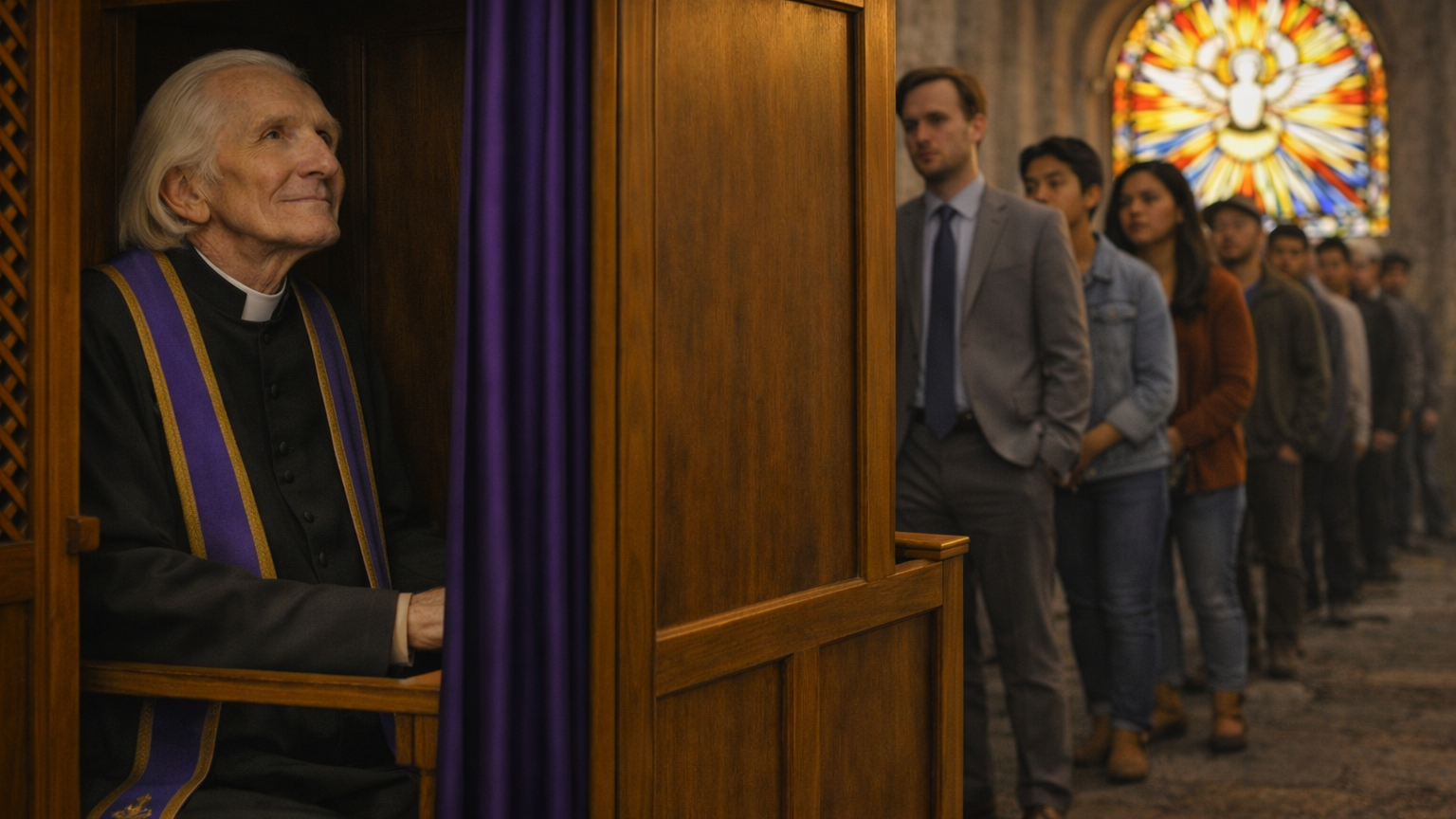
For the LORD sees not as man sees: man looks on the outward appearance, but the LORD looks on the heart.
— 1 Samuel 16:7
Saturday night I caught myself doing something I’m not proud of.
I was at a small gathering and meeting a young couple for the first time.
Before they had even said much, I had already sized them up in my head.
They were good-looking. Well dressed. I learned that his family had money.
And almost instantly I filled in the rest of the story for myself.
Entitled.
Out of touch.
Probably never had to work very hard for anything.
None of this was said out loud.
But it was all happening quietly in my head.
And the funny thing is, the more they talked, the more it became obvious that my snap judgments couldn’t have been further from the truth.
They were thoughtful.
Kind.
Grounded.
Which left me wondering something uncomfortable.
Why do I do that?
Why do I quietly judge people before I really know them?
Is it because I assume they’re judging me too?
Am I that insecure?
What am I trying to prove?
Why can’t I just look into someone’s heart from the get-go and be blind to appearances?
It seems like the world would be a much better place if we all could do that.
The Line-Up
At Mass the next morning, the first reading was the story from 1 Samuel where the prophet Samuel is sent to the house of Jesse in Bethlehem to anoint the next king of Israel.
Jesse lines up his sons one by one before Samuel.
You can almost picture the scene.
Strong sons.
Impressive sons.
The kind of men who looked like they could wear a crown someday — the kind who might take the place of King Saul when the time came.
In other words, they looked the part.
When Samuel saw the eldest son, Eliab, he was immediately impressed.
Surely this must be the one, he thinks.
Even the prophet was ready to judge by appearances.
But God hears his thoughts and stops him.
Do not look on his appearance or on the height of his stature, because I have rejected him; for the LORD sees not as man sees; man looks on the outward appearance, but the LORD looks on the heart.
— 1 Samuel 16:7
That last line got me and I knew that God’s message was for me today as much as it was for Samuel back then.
Scripture continues with the rest of the line-up considered.
The second son steps forward.
Not him.
The third.
Not him either.
Fourth.
Fifth.
Sixth.
Seventh.
One by one the answer is the same.
Finally Samuel asks Jesse,
“Are these all your sons?”
Well… there is one more.
Out in the fields.
So they send for him.
Eventually the youngest son comes in from tending the sheep — David.
Ruddy.
Dusty.
Probably still smelling like the pasture.
Not exactly the polished candidate you might expect to become king.
But he’s the one God chooses.
The Call
Then, just as Mass was ending, Father offered a reminder—and an invitation.
Twice a year — during Advent and Lent — the parishes on our side of Oahu take turns hosting weekly community penance services. Several priests attend, which makes it pretty hard to miss the opportunity to go to confession.
In other words:
Go to confession.
Those words land in my chest like a little spiritual heartburn every time.
Because almost immediately my mind jumps to the same place.
What will I say?
Will it sound silly?
Am I forgetting something important?
Am I saying too much?
Am I saying too little?
Before long it starts to feel like something I need to get exactly right.
Not too serious.
Not too trivial.
Not too long.
Not too short.
I don’t want to be the one who takes an hour and leaves everyone in line wondering what could possibly be so wrong with me.
But I also don’t want to be in and out like I didn’t give my confession any serious thought.
Getting Right
But maybe that’s part of the misunderstanding.
Even the word confession can make it sound like a courtroom scene — an admission of guilt before punishment is handed down.
But in the life of faith, confession means something deeper.
We confess our faith.
We confess that Jesus is Lord.
In other words, we say out loud what we believe to be true.
And the sacrament itself is more properly called reconciliation.
To reconcile means to restore a relationship — to bring two hearts back into harmony after something has come between them.
Which makes me think back to that moment the night before, when I had quietly written a whole story about someone in my head that wasn’t even true.
Confession of sin works in that same way.
It’s not really about being forced to admit guilt.
It’s about honestly acknowledging the truth of our hearts before God.
Not because He doesn’t already know it —
but because speaking that truth opens the door to reconciliation.
And when you think about it, there really aren’t words of judgment spoken in the confessional.
What you hear instead are words of absolution.
Words of mercy.
An invitation to begin again.
Confession isn’t about getting the wording exactly right.
It’s about getting the heart right.
Which finally helped me see something.
Getting right with God isn’t about getting it right.
It’s simply about opening our hearts to Him.
Of course, God already knows what’s in there.
But saying it out loud — honestly and humbly — opens the door for grace to do its work.
Heart-to-Heart
The patron saint of my parish, St. John Vianney, was not the most promising candidate for the priesthood. He struggled in his studies, and more than a few people doubted he would ever make it through seminary.
In some ways, his story reminds me of David (biblical king).
Someone who might have been overlooked if people judged only by appearances.
But God was looking at the heart.
And what a heart it was.
As a priest, St. John Vianney spent hours each day in the confessional listening to the hearts of those who came. The priest stands there in persona Christi — in the place of Christ — offering the forgiveness that Jesus entrusted to His apostles when He breathed the Holy Spirit on them and said:
Whose sins you forgive are forgiven them.
— John 20:23
People traveled miles to receive that mercy.
Thousands of them.
Which makes me realize that confession isn’t really about standing in a line like suspects in a courtroom.
It’s about responding to a heart-to-heart invitation from God.
And in the small village of Ars, people came from miles around to answer that invitation.
Just Show Up
And just thinking about that makes me realize something.
I keep saying I should show up for confession.
This week…
I will show up.
Because when you think about it, the confession line can feel a little like another line-up.
Not the kind where someone stands accused.
But the kind where we step forward honestly, knowing that God isn’t looking at appearances.
He’s looking at the heart.
So maybe the invitation to confession is simpler than we think.
We don’t have to show up polished.
We don’t have to get every word exactly right.
We don’t have to worry about how it sounds to the priest sitting on the other side of the screen.
We just have to show up.
Honestly.
Because reconciliation isn’t about putting on the right appearance.
It’s about speaking heart to heart with God.
Not polished.
Not rehearsed.
Just honest.
And maybe that’s why the line from Sunday’s reading is the one I’ll be remembering as I stand in line for confession this Wednesday:
the LORD sees not as man sees; man looks on the outward appearance, but the LORD looks on the heart.
— 1 Samuel 16:7