
For the disciples, it seemed as though their world had come undone with the crucifixion of Jesus.
The dream of the Kingdom they thought they were helping to build collapsed—crushed under the weight of the cross, pierced by the nails that held Him there. The path forward that had felt so certain with Him leading—so full of promise and direction—had reached an impasse there on Calvary, finished in a way their hearts could not reconcile.
They were paralyzed with shock.
Friday left them scattered. Their teacher was gone, their future clouded by fear, their hope buried.
When they awoke on Saturday, there was nothing but grief to meet them in that sunrise.
No answers. No direction. No movement they could see. Only silence, and the unbearable weight of not knowing what would come next.
This is the day we, as Christians, may be tempted to skip past in our liturgical celebration. After all, we know how the story ends on Easter morning. But we must remember that the disciples did not. We need to sit with them in the wreckage of that moment—in the confusion of this place in time where everything they thought they knew about God felt undone.
Because here is the truth we must not miss: precisely during this painful undoing, God was at work.
Just when everything appeared to collapse, as our Lord breathed His last, the curtain of the Temple was torn in two. God was no longer hidden. God went out.
While the disciples sat numbed, God was moving. In Sheol, the faithful departed were raised. What was sealed was being opened. What had bound us was being loosed. The death that had seemed final was already being undone.
On Easter morning, it is revealed—most gently—in the tomb.
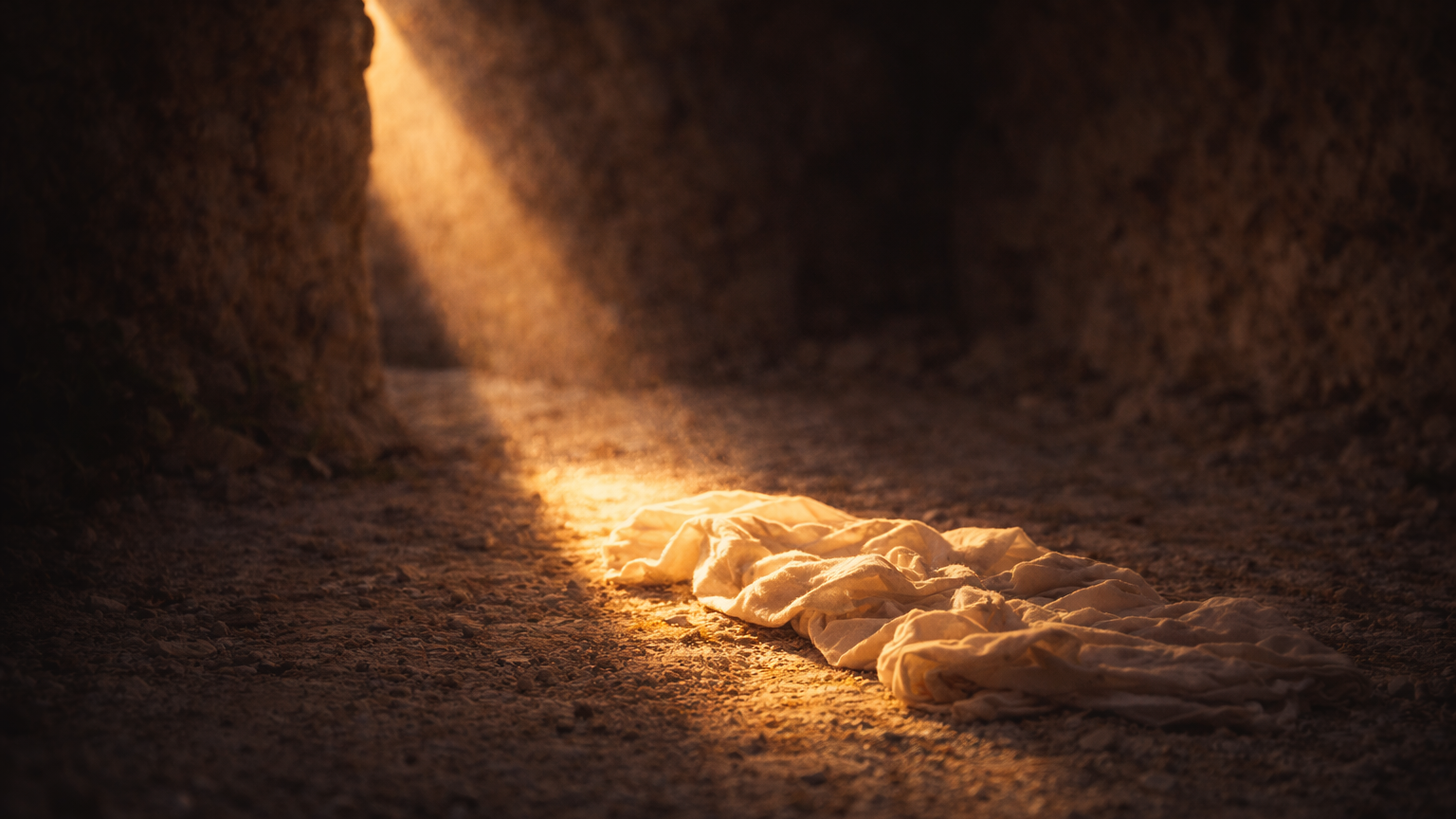
The linen cloths lying there, the face cloth rolled and set aside—undisturbed, cast off, left behind.
The ties that bound Him—undone.
Death could not hold our Savior. The grave could not keep Him. What once covered Him no longer had any claim.
This is what the disciples saw, and what gave way to belief: that what looked like the end was not the end, that what felt like collapse was not defeat, that what seemed sealed was already opening.
If we skip past Holy Saturday, we miss the depth of what has been undone through the death and Resurrection of our Lord Jesus Christ.
We miss the quiet, hidden work of God that makes the Resurrection not just surprising, but transformative.
Because God’s greatest work so often happens there—in the waiting, in the silence, in the space where everything feels undone.
And it is there that He makes all things new—even when we do not immediately see it in our own lives.